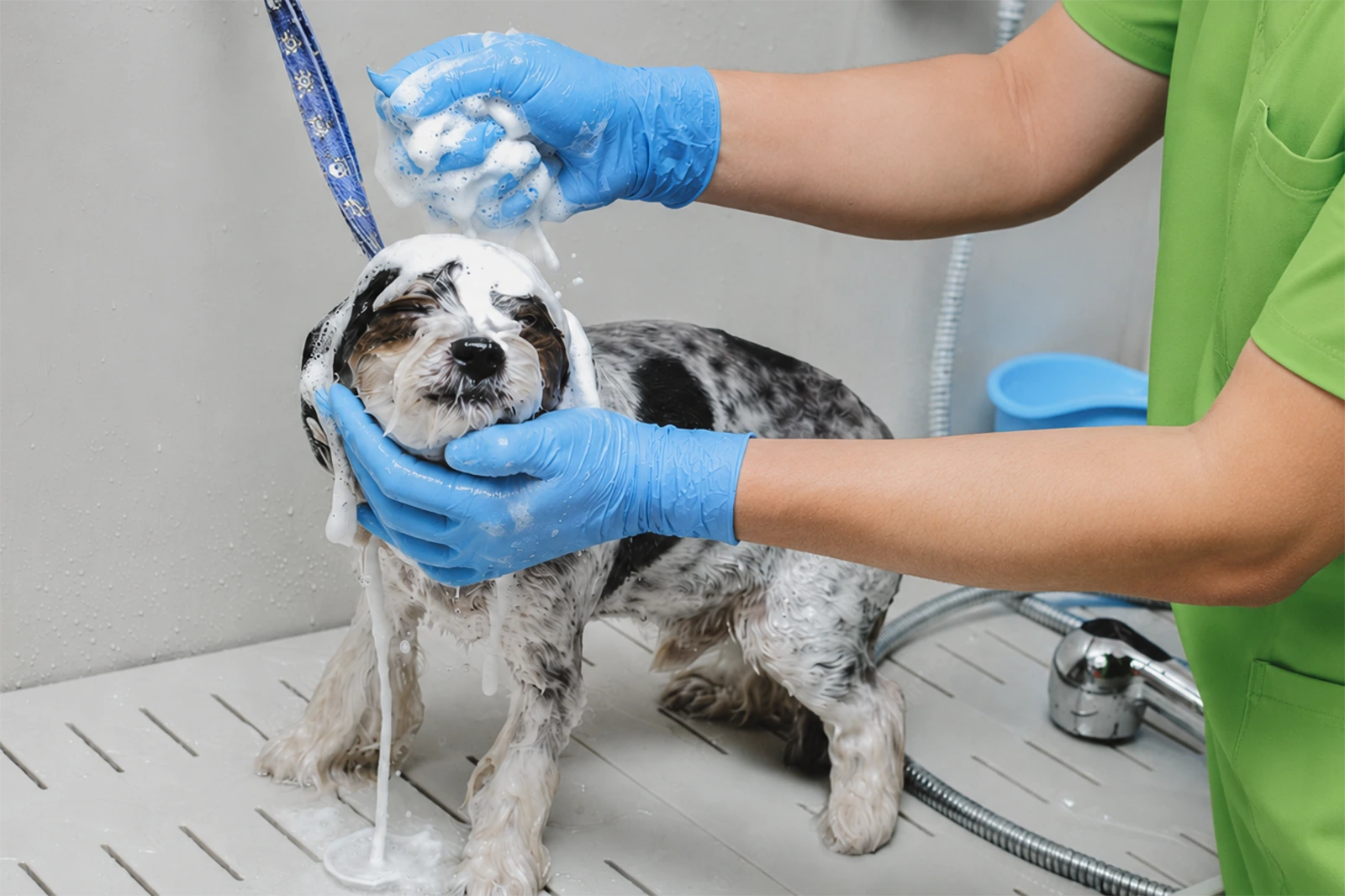
Plenty of owners think of grooming as purely cosmetic, but for dogs managing skin conditions, allergies, or topical medication, a consistent grooming routine is a genuine part of effective treatment. Understanding this connection can make a real difference in how well your dog’s skin actually responds to care.
Skin and coat work as one system
Your dog’s coat and skin function together as a protective barrier, and problems in one area tend to affect the other. Matted fur traps moisture and debris against the skin, creating an environment where bacteria and yeast thrive. Regular brushing and bathing prevent that buildup, reduce irritation, and give your vet or groomer a chance to spot hot spots, rashes, or parasites before they become a bigger problem.
Grooming changes how well topical medication actually works
If your dog is on a topical treatment — a medicated shampoo, a spot-on flea and tick product, a prescribed skin ointment — grooming habits directly affect how well it works. A dog with a heavily matted or dirty coat may not absorb topical treatment properly, since the product simply can’t reach the skin. On the flip side, bathing too often, or with the wrong products, can strip a topical treatment before it’s had time to work. Always ask your vet how grooming should be timed around any topical medication your dog is using.
Skin conditions that genuinely benefit from a grooming routine
- Allergic dermatitis, where regular bathing with a vet-recommended shampoo can reduce allergens on the skin and coat
- Hot spots, which tend to develop faster in matted or damp fur
- Yeast and bacterial infections, which thrive in unclean, moisture-trapped areas
- Flea allergy dermatitis, where grooming helps you catch flea activity early, before it escalates
If your dog struggles with ongoing skin issues, our flea, tick, and heartworm guide is worth a read too, since parasites are one of the most common underlying causes of chronic skin irritation.
Not every grooming product is right for a medicated dog
Fragranced or harsh products can worsen irritation, while medicated shampoos prescribed by your vet are formulated specifically to support treatment. If you’re working with a professional groomer, always share your dog’s current medications and any known skin sensitivities beforehand. Our guide on top-rated pet groomers covers the right questions to ask any groomer handling a dog with specific skin needs.
How often should a dog with skin issues be groomed?
This varies a lot by condition and coat type, which is why it’s worth discussing a specific schedule with your vet rather than following generic advice. Some dogs benefit from weekly medicated baths during a flare-up; others do better with less frequent, gentler grooming that avoids stripping the natural oils protecting their skin.
Staying consistent with the treatment plan
Skin conditions often need grooming and prescribed medication working together over several weeks before real improvement shows up. Running out of medication mid-treatment can set that progress back significantly, which is why a dependable refill habit matters here specifically. PetPharmacy Hub’s directory helps you find a pharmacy that keeps a prescribed skin treatment consistently stocked, so a busy week doesn’t interrupt a plan that’s finally starting to work.
When it’s time to check back in with your vet
If a skin condition isn’t improving despite consistent grooming and medication, or seems to be spreading or getting worse, it’s time to go back to your vet rather than continuing the same routine indefinitely. Skin issues can sometimes point to an underlying allergy, hormonal imbalance, or other condition that needs a different approach entirely.
A small routine, a bigger impact than it looks
Grooming might seem like a minor part of your dog’s overall care, but for dogs managing skin conditions, it’s often the difference between a treatment plan that works and one that stalls out. A little consistency here goes a long way toward keeping your dog comfortable and itch-free.