One of the harder parts of owning a dog is figuring out how worried to actually be. A limp, a skipped meal, a strange sound — is it nothing, or is it something? Every dog and situation is different, but there are warning signs that are well-established enough to act on without hesitation. Knowing them ahead of time removes the guesswork from an already stressful moment.
Breathing problems
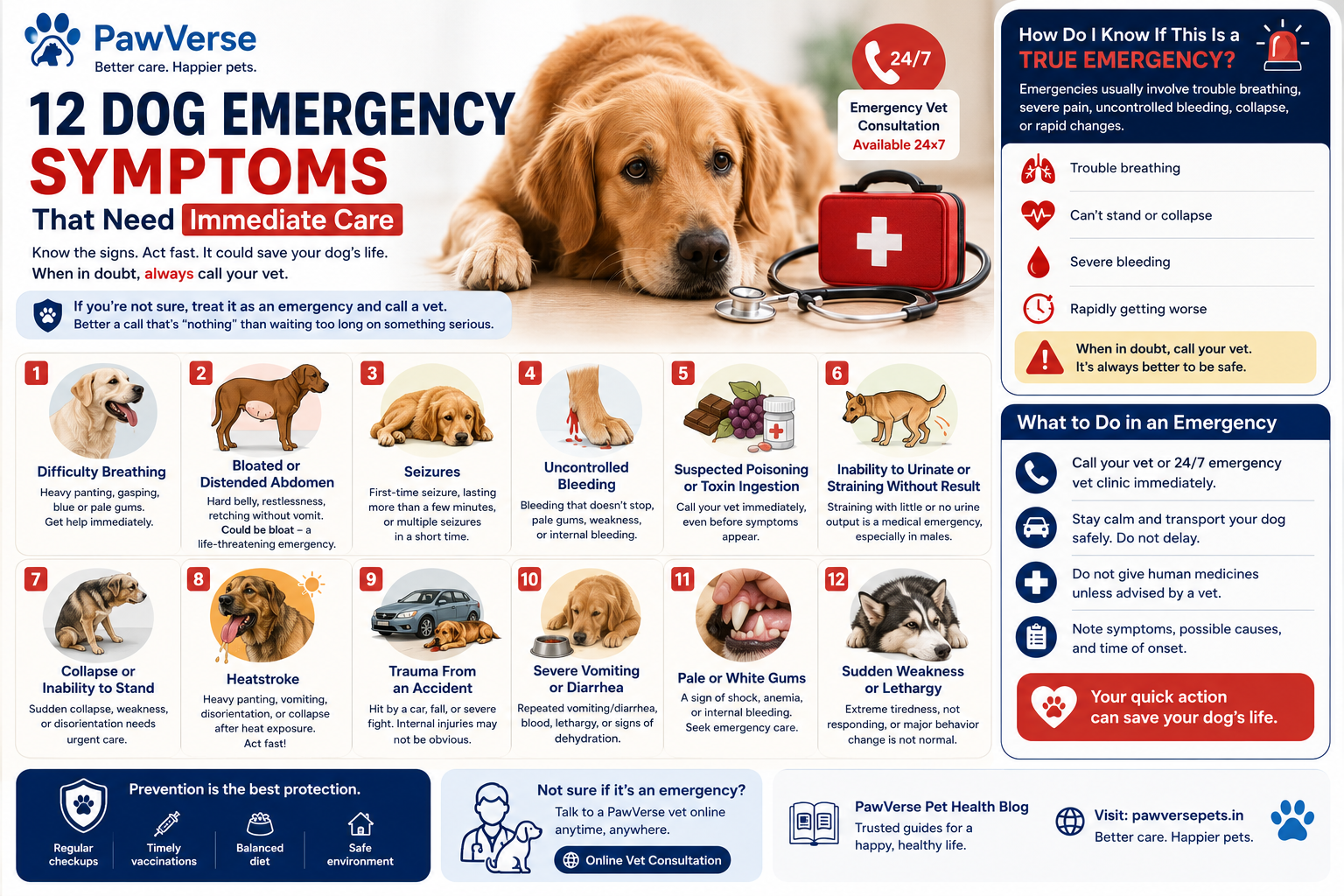
Labored breathing, coughing that won’t stop, blue or pale gums, gasping — all of these are real emergencies. Your dog can’t tell you they’re struggling to breathe, so any noticeable shift in their breathing pattern, especially paired with lethargy or visible distress, should send you straight to an emergency vet.
Collapse, seizures, or sudden disorientation
If your dog collapses suddenly, has a seizure, or seems confused and unsteady on their feet, this points to something potentially serious — toxin exposure, a neurological event, a cardiac issue. Even if they seem to bounce back within a minute or two, a seizure or collapse always earns a same-day evaluation, no exceptions.
A hard or swollen abdomen
A distended, hard, or visibly bloated abdomen — particularly in large or deep-chested breeds — can point to gastric dilatation-volvulus (GDV), commonly called bloat. It requires emergency surgery, and time is genuinely critical here. Restlessness, unproductive retching, and a swollen belly together are a clear signal: go now.
Vomiting or diarrhea that won’t quit
An occasional upset stomach usually isn’t an emergency on its own. But vomiting or diarrhea that repeats, contains blood, or comes with lethargy and refusal to drink can lead to dangerous dehydration fast, especially in puppies and small breeds. If it’s still going after a few hours, don’t wait it out hoping it resolves.
Suspected poisoning
If you know or even suspect your dog ate something toxic — chocolate, xylitol, certain plants, medications, household chemicals — don’t wait for symptoms to show up before acting. Call an emergency vet or a pet poison control hotline right away, even if your dog seems totally fine in the moment. Plenty of toxins have delayed effects, and early treatment makes a real difference in outcome.
Trauma or a suspected broken bone
Any incident involving a car, a fall, or a fight with another animal warrants an emergency exam, even if your dog is walking around and seems alert. Internal injuries aren’t always visible right away, and adrenaline can mask real pain for the first hour or two after something happens.
Straining to urinate, or not urinating at all
Especially critical in male dogs, where a urinary blockage can turn life-threatening within a day. Straining without results, crying out while trying to go, or a firm, painful lower abdomen are all reasons to get care immediately, not to wait and see.
What can usually wait
Not everything needs a midnight drive. A single vomiting episode with nothing else going on, mild limping that improves with rest, minor itching, or a small clean scrape can typically be watched and addressed at your regular vet’s next opening. If you’re genuinely unsure, a quick call to your vet’s office or an urgent-care line can help you decide — our emergency prep guide walks through exactly how to handle that call.
Trust what you’re seeing
You know your dog better than any list ever will. If something feels seriously off, even if it doesn’t match a textbook symptom exactly, it’s always reasonable to get it checked. Vet teams would genuinely rather see a dog who turns out fine than miss one who needed help sooner.
After the visit
Once your dog’s been treated and you’re holding a new prescription, getting that medication quickly matters almost as much as the visit itself. PetPharmacy Hub’s directory helps you find verified pharmacies near you with fast fill times, so treatment can start right away instead of waiting on logistics. Read more in our post on medications commonly prescribed after an emergency visit.
Recognizing these signs calmly and quickly is one of the most useful skills any dog owner can build. It won’t prevent emergencies from happening — but it will help you respond to them the right way when they do.
Find a vet clinic or pet pharmacy near you
Browse PetPharmacy Hub’s nationwide vet clinic directory to find verified pet pharmacies and clinics in your state — searchable by service type, emergency availability, and more.