Emergencies rarely wait for a convenient moment. Having a kit already put together means you’re not digging through drawers while your dog is in distress. Building one takes under an hour, and it can genuinely change how quickly you’re able to respond.
The basics every kit needs
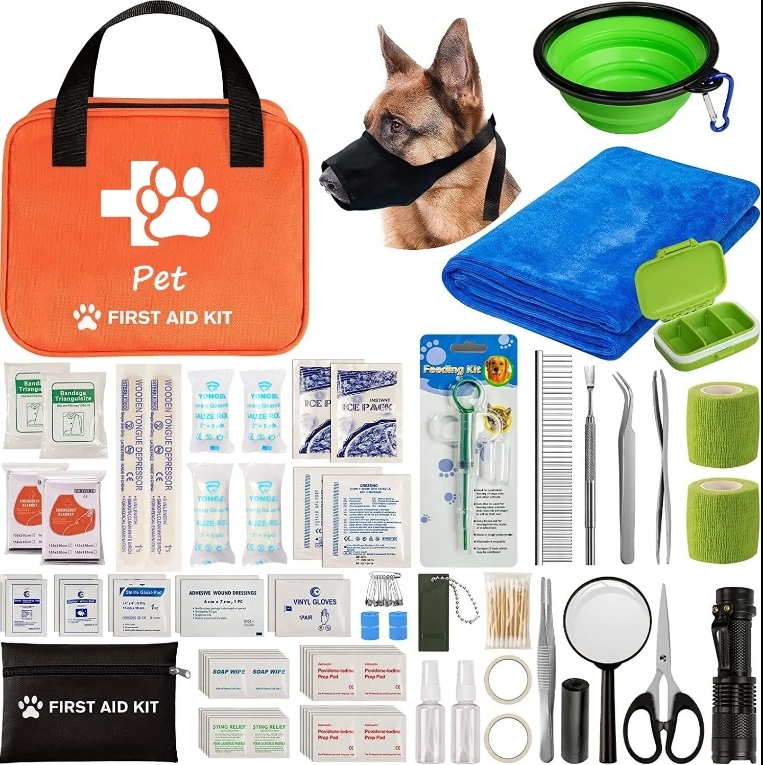
Start with supplies that cover the most common injuries and situations:
- Gauze pads and self-adhesive bandage wrap
- Pet-safe antiseptic wipes or solution — not alcohol-based
- A digital thermometer (rectal, which is standard for dogs)
- Tweezers and blunt-tip scissors
- A muzzle or soft wrap, even for the gentlest dog — pain changes behavior
- A towel or blanket for warmth and safe transport
- Disposable gloves
The medications worth discussing with your vet
This is the part most owners skip, and it’s exactly where a good relationship with your vet — and quick access to a verified pharmacy — actually pays off. Never medicate your dog without professional guidance, but a few things are worth talking through in advance.
Hydrogen peroxide (3%) is sometimes used to induce vomiting after certain toxic ingestions, but only under direct veterinary instruction — it’s harmful used the wrong way. Ask your vet whether this applies to your dog and under what circumstances specifically.
Activated charcoal can help absorb certain toxins, but like peroxide, only when a vet has confirmed it’s right for the substance involved.
Any current prescriptions your dog takes should always be part of the kit, along with a written note of dosage and timing. If your dog manages an ongoing condition, keeping a small backup supply on hand is smart — something that’s far easier when you’re not scrambling to reorder at the last second. PetPharmacy Hub’s directory makes it simple to find a pharmacy offering home delivery so restocking never becomes an afterthought.
Benadryl (diphenhydramine) sometimes gets recommended for mild allergic reactions, like insect stings, but dosage varies significantly by weight — confirm this with your vet ahead of time, not by searching in a panic.
Keep a written record alongside the supplies
Include a laminated card or folder with:
- Your regular vet’s phone number and address
- The nearest 24-hour emergency clinic’s number and address
- Your dog’s current medications, dosages, and known allergies
- Your dog’s weight (many emergency treatments are dosed by weight)
- A pet poison control hotline number
This saves real time, especially if someone other than you — a partner, sitter, or neighbor — ends up handling things.
Where to actually keep it
Somewhere accessible, not buried in a closet. A dedicated bag near your leashes or by the door works well. If you travel with your dog often, a smaller duplicate kit for the car is worth the extra ten minutes to assemble.
Review it every few months
Medications expire, bandages degrade, and your dog’s prescriptions change over time. Set a recurring reminder to check dates and update the kit as needed. This is also a good moment to confirm preventive medications — flea, tick, heartworm — are current. Our prevention guide covers what a solid schedule looks like.
A kit is only half the plan
The other half is knowing when home care is enough and when it’s time to head straight to a clinic. Our article on signs your dog needs immediate veterinary care walks through exactly what warrants the drive versus what can wait.
The real value here
A pet emergency kit isn’t about expecting disaster — it’s about giving yourself the tools to respond calmly if something does happen. Pair a well-stocked kit with a dependable pharmacy relationship, and you’ve got both the supplies and the support system for whatever comes up.